.jpg)
Your home can directly affect your health through poor indoor air quality, hidden mold, excess humidity, and harmful gases like radon or carbon monoxide. Common warning signs include persistent respiratory symptoms, unexplained fatigue, allergy flare-ups that improve when you leave home, and visible or musty-smelling moisture. Addressing these issues through proper construction, ventilation, and filtration creates a healthier living environment for your family.
Most people spend a lot of energy thinking about healthy food, clean water, and regular exercise. Very few stop to consider the air inside their own home. You spend more time indoors than almost anywhere else, and if that environment is silently working against your health, no amount of clean eating or gym time will fully offset it. The good news is that your home does not have to work against you.
Key Takeaways
- Indoor air can be significantly more polluted than outdoor air, according to the EPA, making the quality of your home's air a genuine health concern.
- Symptoms like persistent headaches, fatigue, and respiratory irritation that improve when you leave home are a strong signal that your house may be the source.
- Hidden mold, excess humidity, VOCs from building materials, and poor ventilation are among the most common culprits in an unhealthy home.
- Many of these problems are baked into the way most homes are built, not just the result of neglect or age.
- A high-performance home built with health in mind can prevent most of these issues from developing in the first place.
- If you are planning a custom build or renovation, the decisions made during construction have the greatest long-term impact on your indoor environment.
Things You Must Know
1. Symptoms Alone Are Not Enough to Diagnose a Sick Home
Feeling tired, congested, or headachy at home could have many causes. What makes a sick home pattern distinct is that symptoms tend to improve when you spend time away, whether that is a weekend trip, a few days at a hotel, or even extended time outdoors. If you notice a consistent pattern tied to time spent inside, that is worth investigating seriously rather than dismissing as seasonal allergies or stress.
2. Most Homes Are Not Built With Indoor Air Quality in Mind
Standard construction practices prioritize speed, code compliance, and visual appeal. Ventilation systems, moisture management, and material choices that affect air quality are often afterthoughts. This means that even a brand-new, beautifully finished home can have indoor air quality issues simply because it was built the way most homes are built. The problem is not always visible, and it is rarely obvious at closing.
3. Building or Renovating Is Your Best Opportunity to Solve This Permanently
Retrofitting an existing home with better ventilation or air filtration can help, but it rarely addresses root causes like inadequate air sealing, poor moisture control, or materials that off-gas harmful compounds. If you are planning a custom build or major renovation, the decisions made at the design and framing stage have a far greater long-term impact than any air purifier you could add later.
What Does a "Sick Home" Actually Mean?
The term "sick building syndrome" was originally used to describe commercial buildings where occupants experienced health symptoms without a clear identifiable cause. The same concept applies to homes. A sick home is one where conditions inside the structure, whether from air quality, moisture, gases, or materials, are actively contributing to the health problems of the people living there.
The tricky part is that the causes are usually invisible. You cannot see mold growing inside a wall cavity. You cannot smell radon. You cannot detect elevated VOC levels without testing. And because many symptoms develop gradually, it is easy to assume the problem lies somewhere else entirely.
The Most Common Signs Your Home May Be Affecting Your Health
Your Symptoms Follow a Pattern Tied to Home
Pay attention to when and where your symptoms occur. If you wake up congested every morning but feel fine after a few hours outside, that is not a coincidence. If headaches appear on weekends when you are home all day but disappear during the work week, your home environment deserves a close look. A pattern tied to location is one of the strongest early indicators.
Persistent Respiratory Issues or Allergy-Like Symptoms
The EPA has estimated that indoor air can be two to five times more polluted than outdoor air, and in some cases significantly worse. For people with asthma or respiratory sensitivities, an air-poor home environment can trigger or worsen symptoms that might otherwise be manageable.
Coughing, sneezing, throat irritation, watery eyes, and skin rashes that do not respond to allergy medication are worth evaluating in the context of where you spend your time. These are often the first signs that something in your home is triggering an immune response.
Unexplained Fatigue and Brain Fog
Chronically poor sleep, difficulty concentrating, and low energy throughout the day are sometimes attributed entirely to lifestyle factors. But an environment with elevated CO2, stale air, or low-level exposure to mold or chemicals can produce exactly these symptoms. If you sleep eight hours and still wake up exhausted, the quality of the air you are breathing through the night is a legitimate variable to investigate.
Musty Odors or Visible Moisture Problems
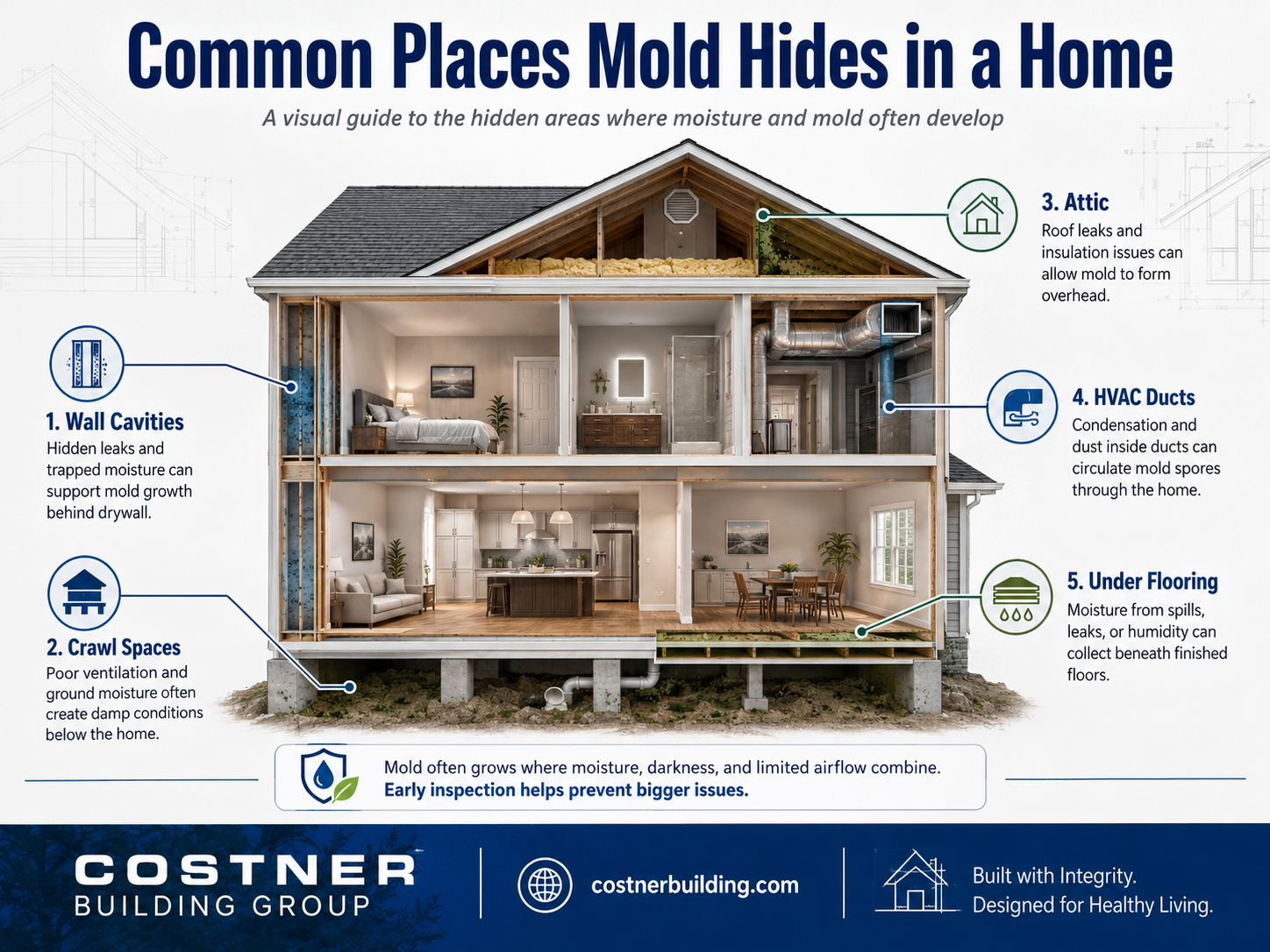
A musty smell, even if faint, is often a reliable indicator of mold or mildew growth somewhere in the home. This could be inside walls, under flooring, in crawl spaces, or around HVAC systems. Visible water stains on ceilings, warped baseboards, condensation on windows, or peeling paint near plumbing are signs that moisture is entering or accumulating where it should not be.
The Hidden Culprits Behind an Unhealthy Home
Mold and Moisture
Mold does not need a flood to grow. It needs moisture and a surface. In many homes, small amounts of moisture accumulate over time inside wall assemblies, around window frames, or in poorly ventilated bathrooms, and mold begins growing long before anyone notices. By the time a musty smell is detectable, the colonization is often already extensive.
Research suggests that exposure to mold and dampness in homes is associated with respiratory symptoms, asthma development, and immune-related health effects, particularly in children and people with pre-existing sensitivities.
The deeper issue is that mold in a home is almost always a symptom of a moisture management problem, not just bad luck. How a home is built, where the vapor barriers are placed, how air moves through the structure, and how humidity is controlled all determine whether mold has the conditions it needs to grow. For homeowners building or renovating, these decisions happen at the construction stage, not after the fact. Learning what makes a house unrepairable can help you understand just how consequential early construction decisions are.
VOCs and Off-Gassing from Building Materials
Volatile organic compounds (VOCs) are chemicals that off-gas from common building and finishing materials, including paints, adhesives, flooring, cabinetry, and furniture. Many VOCs are classified as irritants; some have been linked to longer-term health concerns with repeated exposure.
In a new home or after a renovation, VOC levels can be significantly elevated for weeks or months. In a tightly built home without adequate ventilation, those compounds accumulate rather than dissipate. The solution is not to choose between a tight, efficient home and a healthy one. It is to pair tight construction with intentional mechanical fresh air ventilation, which is exactly what healthy homes are specifically designed to do.
Poor Ventilation and Stale Air
Most homes rely on passive ventilation, meaning air gets in and out through gaps, cracks, and occasional window openings. This worked reasonably well when homes were loosely constructed. As homes have become tighter, that passive strategy has become insufficient. Stale indoor air with elevated CO2 and accumulated pollutants does not get replaced unless there is an active system bringing fresh air in and conditioning it properly.
An energy recovery ventilator (ERV) continuously replaces stale indoor air with fresh filtered air while maintaining temperature and humidity balance inside the home. In homes built without this kind of system, occupants are breathing the same recycled air day after day, with pollutants accumulating over time.
Radon and Carbon Monoxide
These gases are invisible and odorless, which makes them especially dangerous. Radon is a naturally occurring radioactive gas that enters homes through the foundation and is the second leading cause of lung cancer in the United States. Carbon monoxide can result from faulty combustion appliances, attached garages, or inadequate exhaust systems. Both can be present in a home that looks and smells completely normal. Testing for radon is straightforward and inexpensive relative to the risk involved.
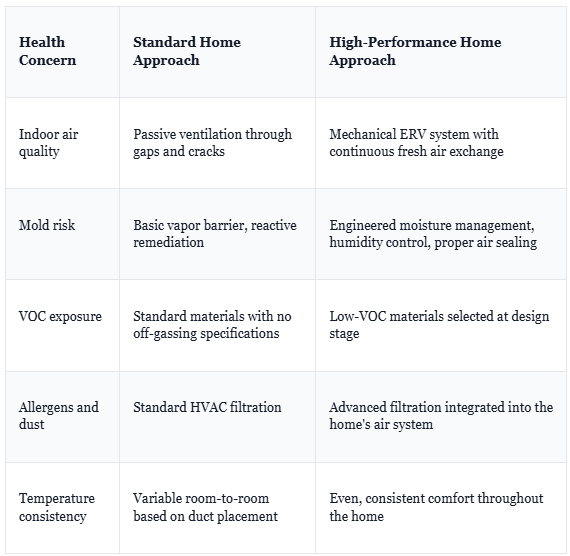
How a High-Performance Home Addresses These Problems by Design
The difference between a standard home and a health-focused high-performance home is not primarily about aesthetics. It is about how the home manages air, moisture, and materials at every stage of construction. Understanding the core principles behind healthy home design makes the distinction clear.
Steps to Take If You Suspect Your Home Is the Problem
- Track your symptoms. Keep a simple log noting when symptoms appear or worsen. Note how long you have been home, what rooms you are in, and whether they improve when you leave. A pattern is more useful than a single incident.
- Test for radon. Radon test kits are available at hardware stores and online. Given the severity of long-term radon exposure, this test is worth doing regardless of whether you have symptoms.
- Check for visible moisture problems. Inspect under sinks, around windows, in bathrooms, and in any basement or crawl space. Look for discoloration, warping, condensation, or anything that smells musty.
- Have your HVAC inspected and cleaned. Dirty ductwork, clogged filters, and poorly maintained systems can circulate dust, allergens, and mold spores throughout your home.
- Consider a professional indoor air quality assessment. A certified indoor air quality professional can test for mold, VOCs, allergens, CO2, and other pollutants and give you a clearer picture of what is actually in your air.
- If building or renovating, make health part of the brief. This is the most effective moment to address indoor air quality, moisture management, and material selection. Retrofitting these systems later is possible but rarely as effective as building them in from the start.
Common Mistakes Homeowners Make When Dealing With a Sick Home
- Treating symptoms rather than causes. Buying air purifiers or allergy medication addresses the surface problem without resolving what is producing the pollutant in the first place.
- Assuming a new home is automatically a healthy home. New construction can have some of the highest VOC levels of any home, and ventilation is rarely prioritized in standard builds.
- Ignoring humidity as a factor. High humidity feeds mold; low humidity irritates respiratory passages. Both extremes affect health, and neither is managed well in most conventionally built homes.
- Overlooking the HVAC system. A home's heating and cooling system touches every room. A neglected or poorly designed system distributes whatever is in the air, including mold spores, dust, and allergens, evenly throughout the living space.
- Waiting for visible signs before acting. By the time mold is visible or a smell is obvious, the underlying moisture or air problem has often been present for months or longer.
What This Looks Like in Practice for Custom Home Buyers
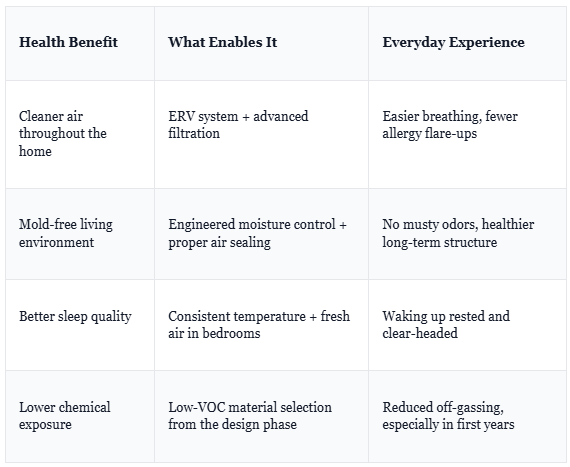
For homeowners building a luxury custom home, this is not about spending more to add health features as extras. It is about making health the organizing principle from the start. When a builder designs around indoor air quality, moisture management, and material selection from day one, the result is a home that actively supports the wellbeing of everyone living in it.
That means waking up without congestion. Sleeping through the night in a room with clean, fresh air. Not worrying about what might be growing inside the walls after the first rainy season. Bringing a baby home to an environment that was designed to protect them, not just impress guests. Homeowners exploring this approach in the Charlotte area can learn more about what a high-performance luxury custom home in Charlotte actually looks like in practice. Those building near Lake Norman will find that building a dream home in Lake Norman involves a very different set of conversations than a conventional custom build.
Frequently Asked Questions
What are the common warning signs of a "sick house"?
The most telling sign is a pattern of symptoms that improve when you leave home and return when you come back. Common symptoms include congestion, coughing, headaches, eye or throat irritation, fatigue, and disrupted sleep. Musty odors, visible moisture stains, and condensation on windows are physical warning signs that the home environment itself may be contributing to these issues.
How can I test my home for mold?
Professional mold testing by a certified indoor environmental professional is the most reliable approach. They can test air samples, surface samples, and inspect areas where mold is likely to hide, including inside wall cavities and HVAC systems. DIY test kits are available but tend to be less accurate and can produce both false positives and false negatives. If you smell something musty or have had any water intrusion, a professional assessment is worth the investment.
What role does poor air quality play in everyday health?
Indoor air quality affects nearly every system in the body when exposure is ongoing. Respiratory symptoms are the most immediate, but poor air quality has also been linked to sleep disruption, fatigue, cognitive performance, and immune function. Because most people spend the majority of their time indoors, the cumulative effect of breathing polluted indoor air every day is substantial, even when the exposure feels low-level.
Could invisible gases be making me sick?
Yes, and this is one of the most overlooked risks in residential environments. Radon is the most serious, as it is radioactive and odorless, and it is the second leading cause of lung cancer in the U.S. Carbon monoxide from combustion appliances, attached garages, or faulty venting can cause serious symptoms rapidly. Both require testing to detect, because no amount of observation or smell will reveal their presence.
What should I do if I suspect my house is the problem?
Start by tracking the pattern of your symptoms relative to time spent at home. Test for radon, inspect for visible moisture issues, and have your HVAC system serviced and inspected. For a more complete picture, hire an indoor air quality professional to assess what is actually in your air. If you are planning to build or undertake a major renovation, use that opportunity to address these issues by design rather than trying to retrofit solutions into a home that was not built with health in mind.
Your Home Should Be Working For Your Health, Not Against It
Most people already understand that what you eat, how you move, and how you sleep affects your health. What fewer people have considered is that the air inside their home is just as important a variable, and in some ways harder to control after the fact.
The good news for anyone planning a custom build is that these problems are entirely solvable. They just need to be part of the conversation from the beginning, before the foundation is poured, before the walls go up, and before the finishes go in. That is where the real leverage is.
At Costner Building Group, every home is built around one central idea: your home should support your health, your comfort, and your quality of life every single day. Not just look beautiful on the day you move in. If you are building or considering a major renovation and want to understand what a genuinely healthy home looks like in practice, reach out to the Costner Building Group team to start the conversation.
Build Better, So You Can Live Better.